Tafseer Surah Al-Adiyat
The Charging Horses
📖Overview of Surah Al-Adiyat
Surah Al-Adiyat is the 100th chapter of the Qur'an, consisting of 11 powerful verses that begin with a vivid oath by charging horses and end with a reminder of resurrection and Allah's perfect knowledge.
📜Complete Surah in Arabic
وَالْعَادِيَاتِ ضَبْحًا فَالْمُورِيَاتِ قَدْحًا فَالْمُغِيرَاتِ صُبْحًا فَأَثَرْنَ بِهِ نَقْعًا فَوَسَطْنَ بِهِ جَمْعًا إِنَّ الْإِنسَانَ لِرَبِّهِ لَكَنُودٌ وَإِنَّهُ عَلَىٰ ذَٰلِكَ لَشَهِيدٌ وَإِنَّهُ لِحُبِّ الْخَيْرِ لَشَدِيدٌ أَفَلَا يَعْلَمُ إِذَا بُعْثِرَ مَا فِي الْقُبُورِ وَحُصِّلَ مَا فِي الصُّدُورِ إِنَّ رَبَّهُم بِهِمْ يَوْمَئِذٍ لَّخَبِيرٌ
🧠Surah Flow (Mind Map Style)
This surah moves from a powerful visual oath to a deep diagnosis of human nature, then to a clear reminder of the Day of Judgment.
📝Verses with Translation
📚Key Vocabulary
🔍Verses 1-5: The Oath by the Charging Horses
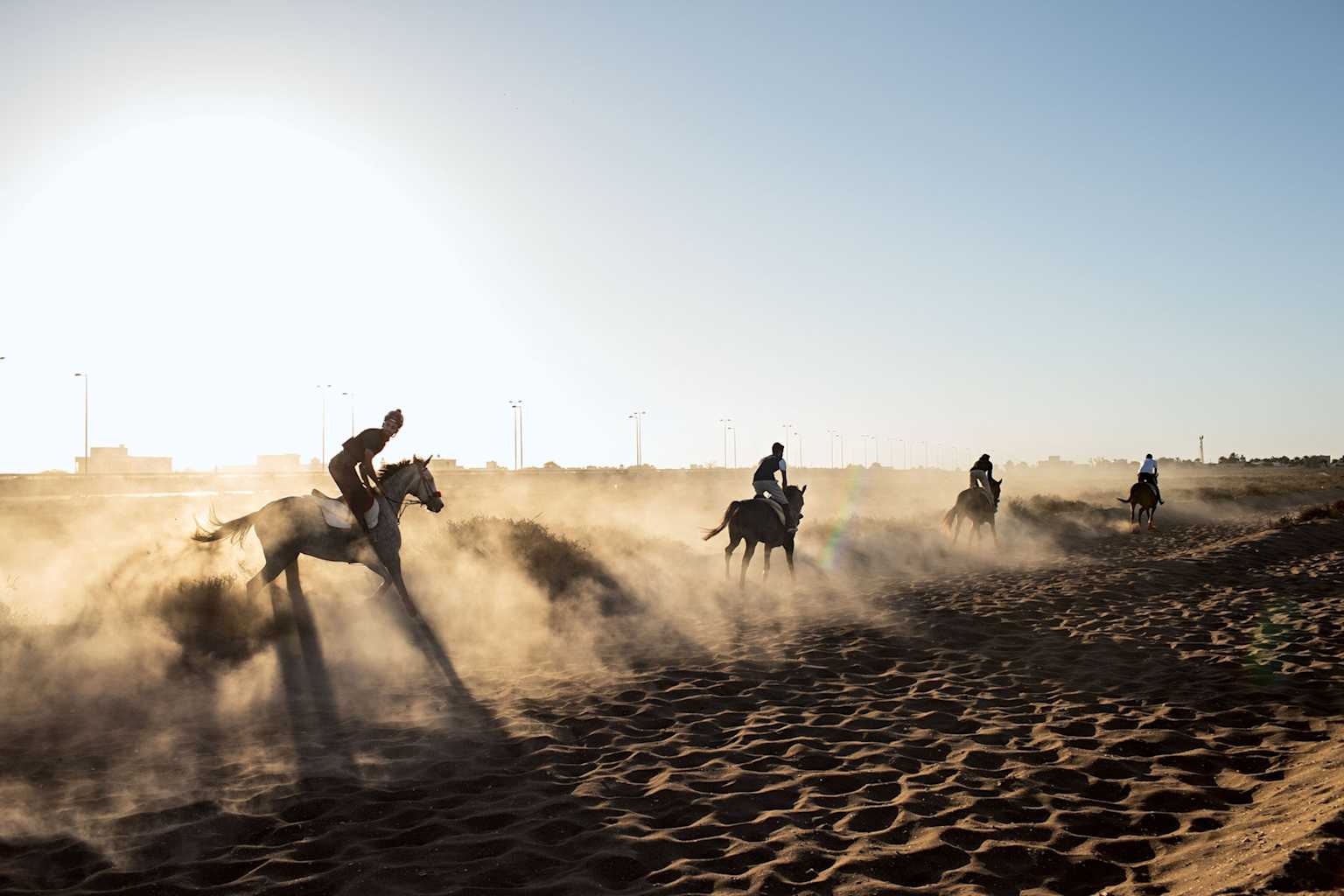
Visualizing the powerful scene of horses charging through the desert at dawn
The surah begins with Allah taking an oath by war steeds that charge swiftly and fiercely. Their hooves pound the earth and their chests heave as they run, so their panting can be heard clearly.The listeners' attention is immediately captured by this dynamic image.
The focus then moves to their hooves striking stones and pebbles so forcefully that sparks fly in all directions. This is like the hammer of a blacksmith hitting red hot iron on an anvil, creating a shower of sparks.The listener is almost overwhelmed by the force behind these vivid scenes as they build toward a climax.
Another layer is added to the scene. It is a sudden attack at dawn, when the enemy is still unaware and unprepared. There is no chance for an organised defense and every person tries to escape the deadly hooves drawing near. Every man is for himself, trying to avoid the murderous hooves of the charging horses as they rapidly approach their encampment.
As the raiding horses rush forward, clouds of dust rise around them. The charge begins to slow as the enemy is met and the dust that was trailing behind catches up and starts to cover them like a screen. But the momentum continues to build as the rhythm tight-ens and the climax nears.
Here the climax is reached as the charging group penetrates right into the centre of the enemy gathering. The heart of the enemy line is struck and victory is achieved. For the first listeners who loved horses and battle, this was the perfect surprise attack ending in a crushing success.
It is as if Allah is saying that by these scenes which you love and which completely capture your attention, there is something much more important that you must think about.
🔍Verse 6: Human Ingratitude
After the oath, Allah declares that people are truly ungrateful to their Lord. Many people deny the blessings Allah has given them and behave as if they deserve everything they have by their own effort.
The truth is that effort alone does not explain who becomes wealthy and who does not. There are those who work hard yet have little and others who work less yet receive much more. The real deciding factor is Allah's distribution of provisions.
Allah says: وَاللَّهُ فَضَّلَ بَعْضَكُمْ عَلَى بَعْضٍ فِي الرِّزْقِ (And Allah has favoured some of you over others in provision). Allah gives freely to whom He wills, when He wills, regardless of the worldly situation, and He makes this a test to expose the ungrateful and confirm the righteous.
The Prophet ﷺ said that we should look at those below us and not at those above us in worldly matters so that we do not deny Allah's blessings. When a person remembers that there are many less fortunate than him, he is more likely to recognise his countless blessings and be thankful.
🔍Verse 7: Man as Witness Against Himself
Human beings testify against themselves by their own behaviour. Even a believer who repeats phrases of praise and thanks many times may act in ways that contradict his words.
He holds tightly to his wealth as if it truly belonged to him, forgetting that it is only a trust and a test from Allah. He sees those in need but finds many excuses not to help them, or if he gives, he gives much less than he is able to give. In this way his actions witness to his ingratitude even while his tongue claims to be thankful.
🔍Verse 8: Intense Love of Material Good

The intense love of wealth that drives people to forget their Lord
People are pushed by their strong love of worldly good to pour all their energy into collecting it. They spend most of their time and thinking on how to gain more wealth and benefit in this life.
They forget that death will soon come and none of that wealth will go with them. This chasing of worldly fantasy makes them short sighted. They only see what lies directly in front of them and ignore the unseen realities behind it.
Without guidance from Allah, a person does not know what is truly good for him. He may run after evil while thinking he is running after good. Allah said: "Perhaps you dislike something that is good for you and love something that is bad for you" (Soorah al-Baqarah 2:216). This confusion is the result of loving worldly good more than loving Allah and the Hereafter.
🔍Verse 9: Resurrection from the Graves
Allah asks if such a person does not know what will happen when what is in the graves is poured out. The question carries blame and surprise at the foolishness of ignoring repeated warnings.
On that Day all people will be brought out from their graves, no matter how they were buried or what happened to their bodies. Those who were burnt and their ashes scattered, those whose bodies were eaten by animals, all will be resurrected. Every part of the earth, seas and winds that contain their remains will release them by the command of Allah.
🔍Verse 10: What Is in the Hearts Exposed
At the very moment bodies are brought back to life, everything hidden inside the hearts will be separated and shown. Deeds that were recorded in the souls will be divided into good and evil and weighed on the scale of perfect justice.
Allah mentions the chest because it contains the heart, which leads and directs a person’s behaviour. The innermost secrets are kept there, hidden from all creation. However, Allah has the key that opens every secret. That key is His complete knowledge from which nothing escapes.
🔍Verse 11: Allah's Perfect Knowledge and Justice
On that Day, Allah will be fully aware of them and their true condition. The weighing of deeds will only show people what Allah already knew about them before He created them.
Allah could have created mankind, divided them into two groups and placed one in Paradise and the other in Hell according to His prior knowledge. Instead, He gave people life and the opportunity to act so that they prove by their own deeds the place they deserve. This makes clear the perfection of Allah's justice.
Allah says: "The word of your Lord has been completed in truth and justice. None can change His words, and He is the All-Hearing, All-Knowing" (Soorah al-Anعام 6:115). His judgment on that Day will be perfectly fair and based on full knowledge of every action and intention.
🎓Key Lessons from Surah Al-Adiyat
The powerful image of charging horses shows how much humans admire courage, power and speed. These beloved scenes are used to pull our attention to something greater, which is our relationship with Allah and the Hereafter.
Many people deny Allah's blessings in practice even if they admit them in words. They attribute success only to their own effort and forget that provision is distributed by Allah and is a test, not a guarantee of His pleasure.
A person may say "Alhamdulillah" many times, yet his actions show greed and selfishness. The way someone uses wealth and responds to the needs of others reveals whether he is truly thankful or actually ungrateful.
Strong attachment to material good pushes people to forget death and the Hereafter. Without divine guidance, a person may chase what is harmful while thinking it is beneficial, because he measures good by worldly gain alone.
When graves are opened and people are raised, every false idea about life and success will fall apart. No body will remain hidden and no person will escape standing before Allah.
What was in the chests, which includes intentions, motives and hidden feelings, will be brought out and sorted. A person’s real worth is not just in outward deeds but in the state of his heart, which will be fully exposed on that Day.
Allah's judgment on the Day of Resurrection is for the benefit of His servants. It confirms with full evidence what He already knew and removes any excuse that the people of Hell could claim regarding unfairness.
By remembering those who have less, recognising that provision comes from Allah and giving from what he loves, a believer cleanses himself from kanood and aligns his heart with true gratitude and trust in his Lord.
✅Knowledge Check Quiz
Test your understanding of Surah Al-Adiyat. Click on your answer choice. Try to reach 10 out of 10.
Progress: 0 / 10 answered | Score: 0